What Are Stuffed Animals Made Of? A Guide to Plush Materials & Fills
Jesse Long
Head of Production, DreamPlush
July 9, 2026 · 8 min read
Quick answer—Stuffed animals have two layers: an outer shell — usually short-pile polyester 'minky', plush fleece or cotton — and a filling, most often polyester PP-cotton fiberfill (sometimes recycled rPET, plastic pellets or foam). Faces are embroidered and every part is safety-tested for children.
Pick up any stuffed animal and it feels simple — but there’s a bit more going on inside than most people expect. Almost every plush is really just two materials — a soft outer fabric and a fluffy inner fill — plus a few hidden parts that keep it safe and holding its shape. This is a plain-English guide to what those materials are, how they differ, and how they come together into the toy in your hands.
The anatomy of a plush
Whether it’s a teddy bear, a brand mascot or a cotton doll, a stuffed animal is built from four things:
- The outer fabric — the soft, fuzzy “skin” you see and touch.
- The filling — the fluff inside that gives it body and squish.
- The safety parts — child-safe eyes and nose, strong thread, reinforced seams.
- The decoration — embroidery, printing or applique for the face and details.
Outer fabrics — the soft skin
The outer layer is almost always a knitted polyester plush — the fuzzy pile is what makes a toy feel cuddly. The main difference between fabrics is the pile (how long and dense the fibers are), which changes both the feel and how much fine detail the toy can hold:
| Fabric | Feel | Best for | Note |
|---|---|---|---|
| Short plush (velboa) | Smooth, low pile | Crisp detail, most characters | The most common all-rounder |
| Minky | Ultra-soft, silky | Premium baby & cuddle toys | Very popular for softness |
| Long-pile fur | Fluffy, shaggy | Furry animals — dogs, cats, lions | Hides small detail |
| Sherpa / bouclé | Curly, textured | Sheep and textured characters | Distinctive surface |
| Cotton / knit | Matte, natural | Cotton dolls, apparel-style toys | Common for idol dolls |
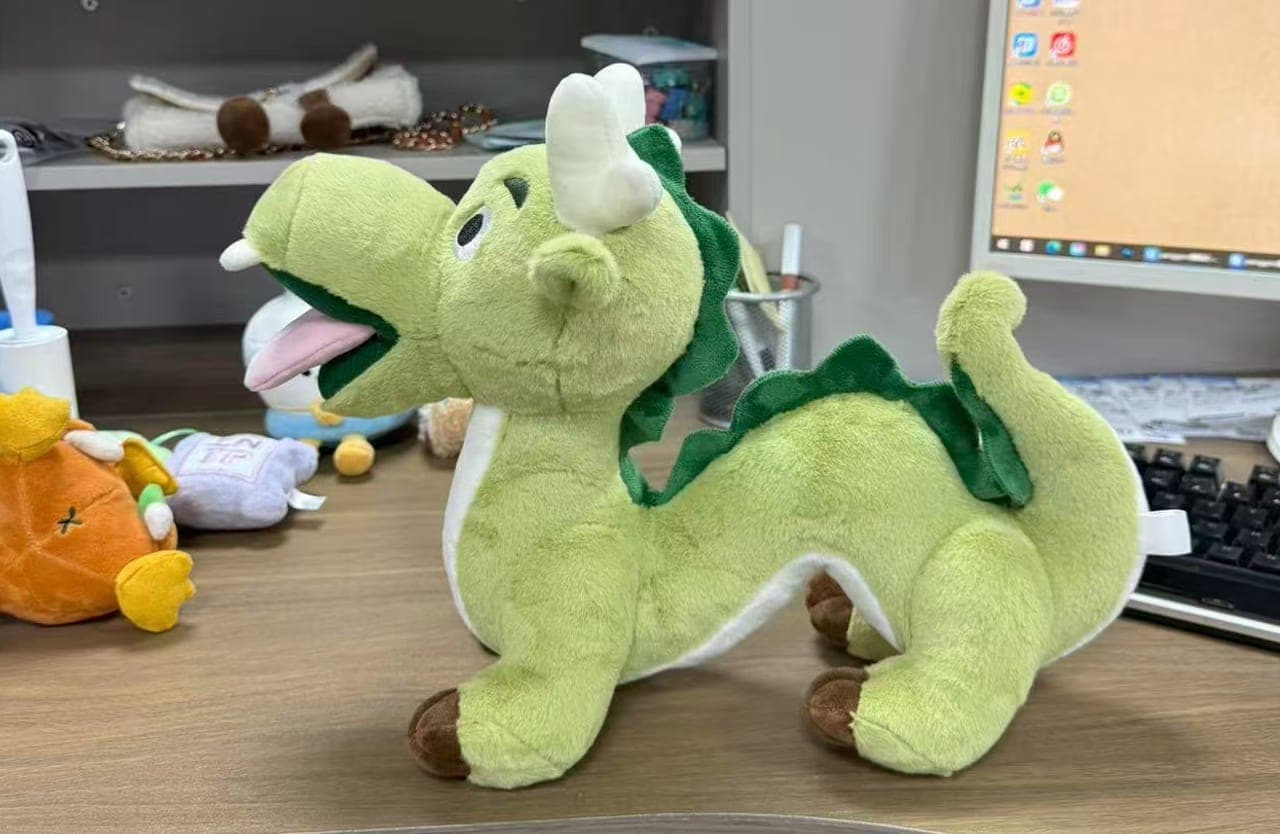
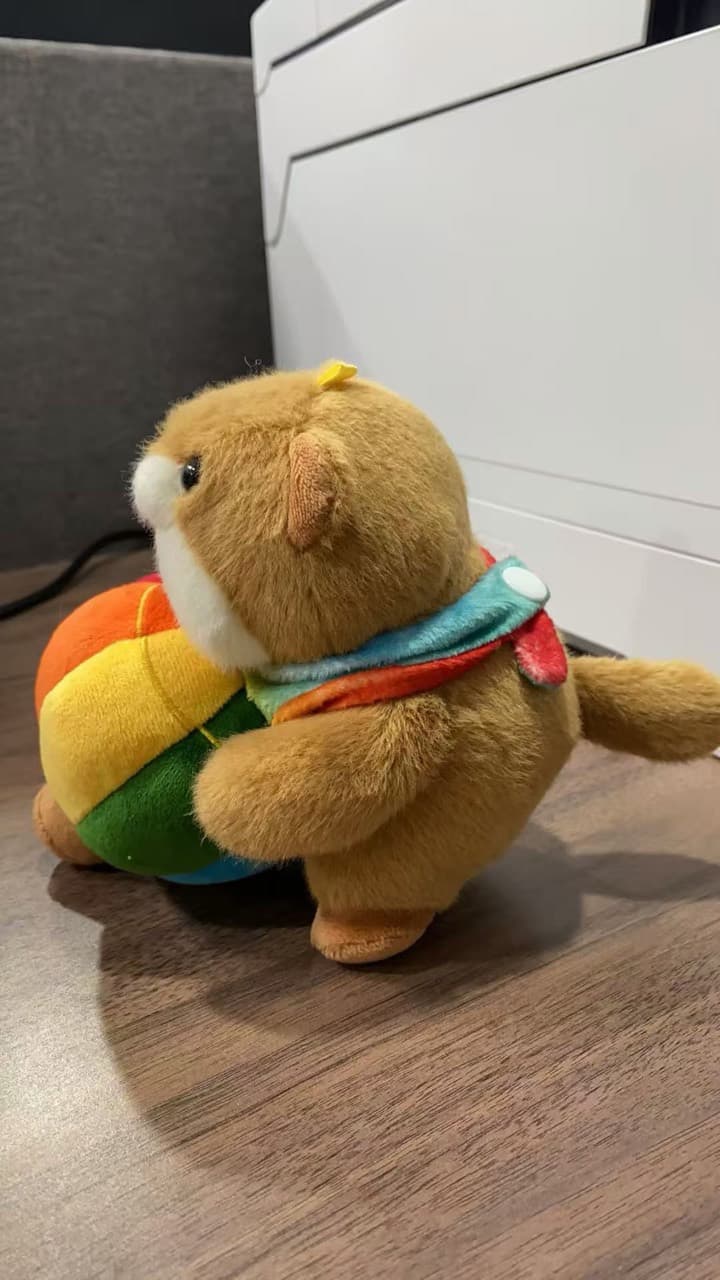
As a rule of thumb, short pile shows detail and long pile feels softer but blurs it — so a character with a detailed face uses short plush, while a fluffy dog uses long fur. The two below show the contrast:
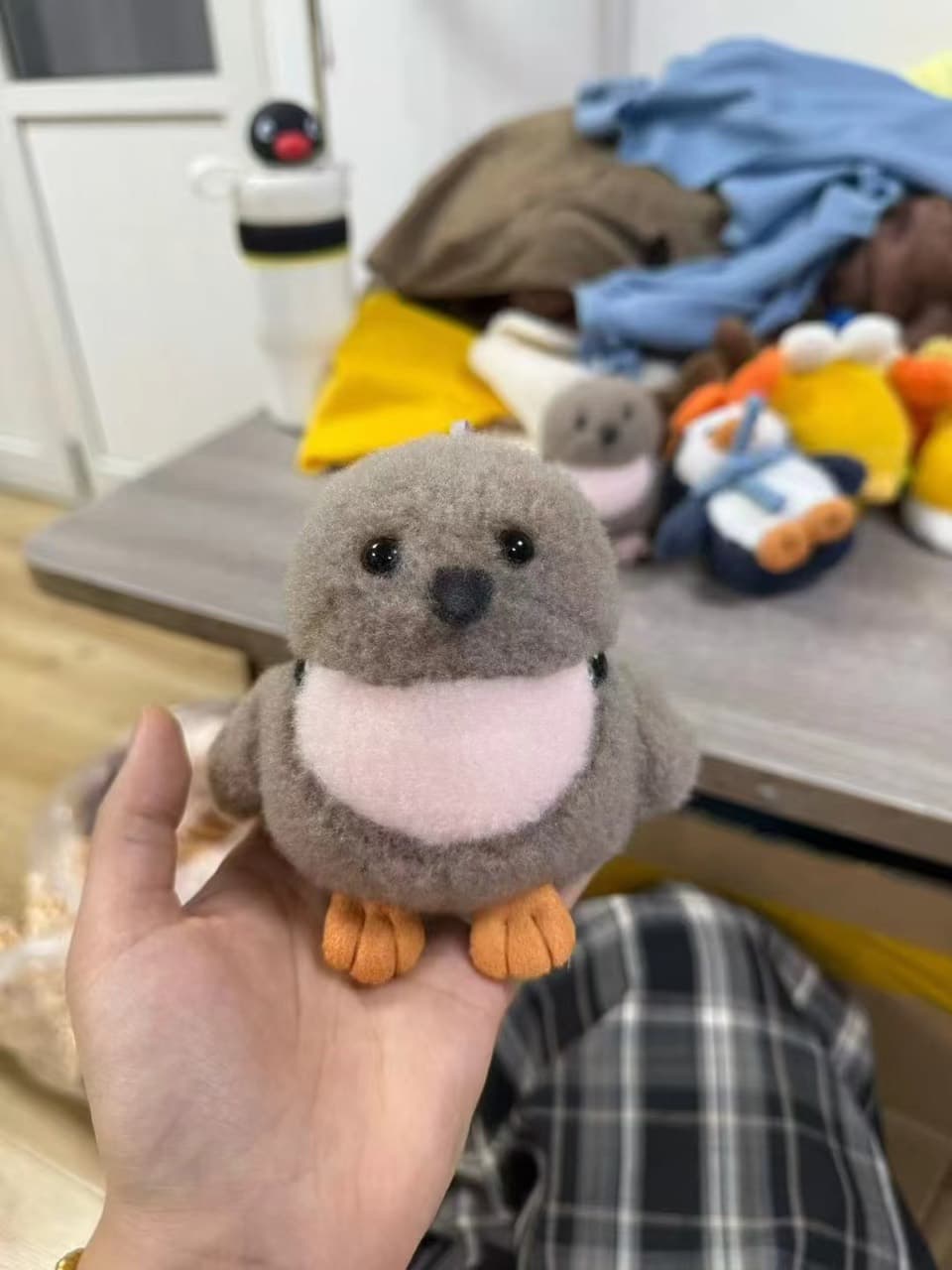
Polyester is used because it’s soft, colorfast, washable and easy to color-match to a brand palette. For the full technical breakdown — pile height, GSM, minky vs sherpa and how to specify each — see our plush fabrics & fills guide.
Fillings — what’s inside
The stuffing decides how a plush feels in the hand — light and springy, soft and dense, or heavy and posable. The most common is polyester fiberfill (often called PP cotton or poly-fil), a fluffy batt spun from fine polyester fibers. Here’s how the main options compare:
| Filling | Feel | Note | Typical use |
|---|---|---|---|
| PP polyester fiberfill | Light, springy, fluffy | Most common; hypoallergenic & washable | Standard body fill |
| Cotton | Softer, a little denser | Natural feel | Cotton & idol dolls |
| PE beads (weighted) | Heavy, moldable | Adds weight and posability | Bean bottoms, weighted plush |
| Foam / memory foam | Firm, holds shape | Structure for big or pillow shapes | Cushions, large plush |
| Recycled rPET fiber | Same as PP, lower footprint | Spun from recycled bottles | Eco lines |
The safe, hidden parts
The materials you don’t see matter most for children. A well-made plush uses:
- Child-safe eyes & nose — either embroidered, or locked-in plastic safety eyes that resist pulling, never glued-on beads.
- Strong thread & reinforced seams — double-stitched so the fill stays in and the toy survives hugs and washing.
- Non-toxic, tested materials — fabrics and fills certified to toy-safety limits.
Reputable factories build to EN71 (Europe), ASTM F963 (US) and CE, and can supply test reports; textile-level checks like OEKO-TEX confirm the fabric itself is free of harmful substances. Our full explainer is in the plush toy safety standards guide.
How the materials become a plush
Those raw materials turn into a finished stuffed animal in a clear sequence:
- 1Choose materialsPick the outer pile and the fill for the feel you want.
- 2Cut the panelsLay the pattern and cut the fabric pieces (laser or die-cut).
- 3Sew the shellStitch the pieces inside-out and add embroidery.
- 4Fit safety partsLock in child-safe eyes; reinforce the seams.
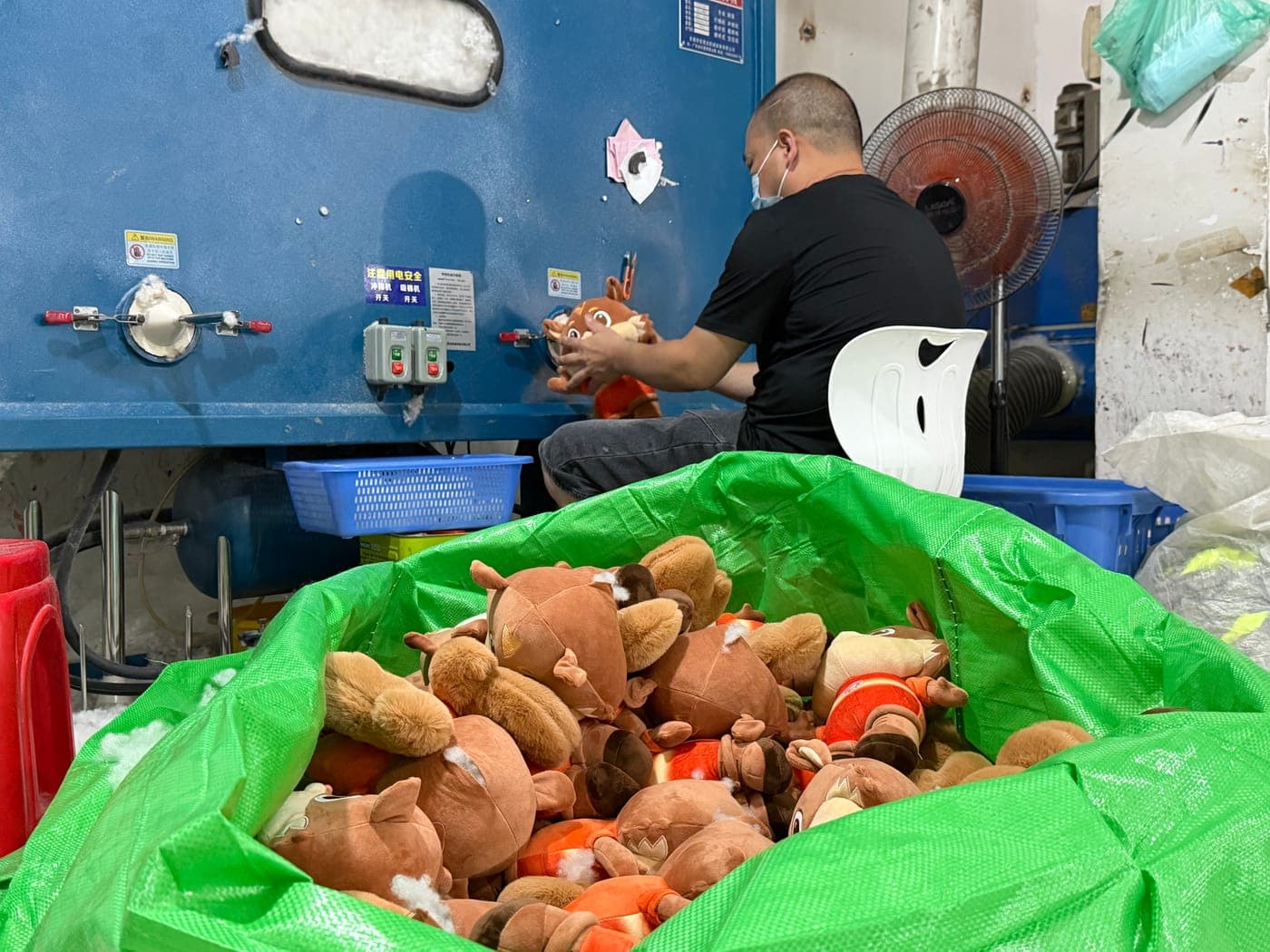
- 5StuffFill evenly with fiber — add beads for weight where needed.
- 6Close & finishHand-close the last seam and brush out the pile.
Frequently asked questions
What are stuffed animals made of?+
Two main parts: a soft outer fabric (usually a knitted polyester plush such as short pile, minky or long fur) and an inner filling (most often polyester fiberfill, sometimes cotton, weighted beads or foam). Hidden safety parts — child-safe eyes, strong thread and reinforced seams — hold it together.
What is the stuffing inside a stuffed animal called?+
Most stuffed animals are filled with polyester fiberfill, often called PP cotton or poly-fil. It's a lightweight, springy, hypoallergenic and washable fluff spun from fine polyester fibers. Cotton, polyethylene (PE) beads and foam are used for specific effects like a softer feel, added weight or a firm shape.
Are plush toy materials safe for babies and kids?+
They can and should be. For children, we use non-toxic fabrics and fills, securely embroidered or locked-in safety eyes rather than glued parts, and reinforced seams, all made to EN71, ASTM F963 and CE toy-safety standards. Ask any factory for test reports before you order.
Can stuffed animals be made from eco-friendly materials?+
Yes. Recycled polyester (rPET) spun from plastic bottles behaves almost identically to virgin fiberfill for both the shell and the stuffing, and organic cotton is an option for the outer fabric. It's a simple swap that lowers the footprint without changing how the toy feels.